


Good To Stargaze
3.785.00 Reviews
App Specs
- Version
- 2.10.1
- Updated On
- License
- Free
- Downloads
- 50,000+
- Developer
- Good To Forecast
- Categories
- Weather
- Platform
- Android
Screenshots
 Analysis by AppCompare
When I decide whether to take a telescope outside, the hardest part is often not choosing what to look for; it is judging whether the sky will cooperate. That is the problem Good To Stargaze is designed to help with. Rather than treating weather as a general forecast, this weather app puts the conditions relevant to looking up at the night sky at the center. I find that focus useful: a night can feel calm from the window and still be disappointing for stargazing if the view is obscured or the air is uncomfortable.
A forecast with stargazing in mind
The practical value here is the attempt to turn several sky and weather considerations into a more useful planning decision. A regular forecast helps me decide whether to bring a coat or expect rain; a stargazing-focused one gives me a reason to consider whether setting aside an evening is worthwhile at all. That distinction matters most when I need to plan ahead, rather than stepping outside for a quick look.
The app’s focus also makes it easier to think in terms of trade-offs. A promising visibility outlook does not automatically mean a perfect night, and a less-than-ideal forecast does not necessarily mean there is nothing to see. I treat the information as a planning aid, not a guarantee. For a casual observer, that is a sensible way to use a forecast: check it before committing, then make the final call based on the sky where you are.
How I would use it to plan an evening
If I had a clear evening free, I would check the app before hauling equipment or travelling to a darker spot. That simple step can prevent an avoidable trip when conditions look unpromising. If the outlook seems reasonable, I could then decide whether a short session from home is enough or whether a longer outing is worth the effort. This is a more grounded role than trying to make the app a full astronomy guide.
It also suits people who like to build a habit around looking at the sky. A quick check can become part of deciding what to do after dinner, much like looking at the weather before a walk. I would not let one forecast settle every question, but it can narrow the choice between “stay in,” “take a quick look,” and “make a proper night of it.”
Where it fits among weather apps
Most general weather apps are made to answer everyday questions about rain, temperature, and what to wear. That remains the better choice if your main concern is commuting, outdoor work, or planning a broad range of activities. This app’s appeal is narrower: it is meant for someone who wants weather information framed around stargazing rather than another all-purpose forecast on their home screen.
That specialization is a genuine advantage when the night sky is the reason you are checking conditions, but it is not a substitute for every tool an astronomy enthusiast might use. I would pair a forecast with my own observation of the local sky and use a separate astronomy resource if I wanted detailed information about objects to locate. The useful question here is not whether the app replaces every other source, but whether it helps me make a better go-or-no-go decision.
Worth Reading Before You Choose

Flipboard Shows What News Apps Must Do Beyond the Feed

Switching to Android Auto Means Rethinking Your Driving Routine

Google Calendar Makes a Crowded Week Easier to Manage

Ludo King Makes the Most of the Minutes Between Plans

Baby Panda World Brings Quick Play to Modern Phones, but Its Game Library Feels Busy

ESPN’s Live Game View Makes Following Close Games Easier
Who gets the most from it
I see the clearest fit for beginners, occasional sky-watchers, and telescope owners who want a quick way to think through whether an outing is worthwhile. It can also help someone who is trying to turn an occasional interest into a regular routine: checking conditions gives the hobby a practical starting point without requiring an elaborate plan. If you only want a standard local forecast, though, a general weather app may be simpler and more relevant.
Good To Forecast develops the app, which is free to install and intended for everyone. It has a 3.6 average from around 638 ratings, with more than 50,000 installs, so it has found an audience while leaving room for individual preferences to differ. Optional in-app purchases range from $1.99 to $109.99 per item, so I would check the purchase details in the app before paying for anything; the free download is a sensible way to decide whether its particular focus suits your routine.
First Impressions
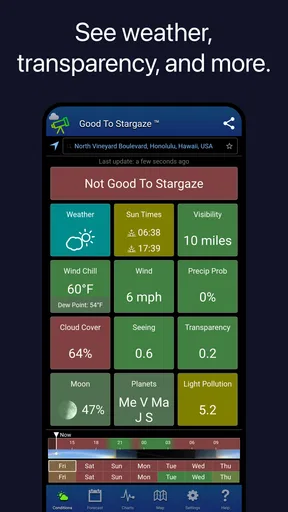
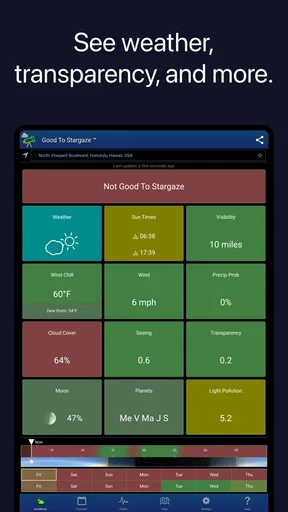
When you first open Good To Stargaze, it feels like you’re being welcomed into a community of stargazers. The interface is clean and straightforward, which I totally appreciate. No one wants to sift through clutter when they’re just trying to see if it’s a good night to head out. The app immediately gives you a quick glance at the current stargazing conditions, which is super handy.
Features That Shine
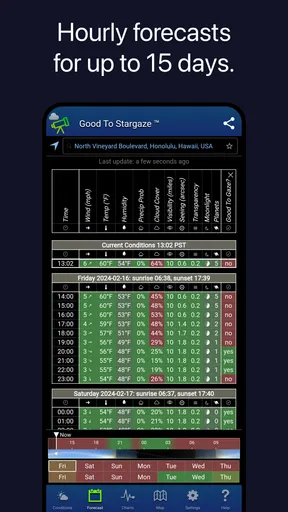
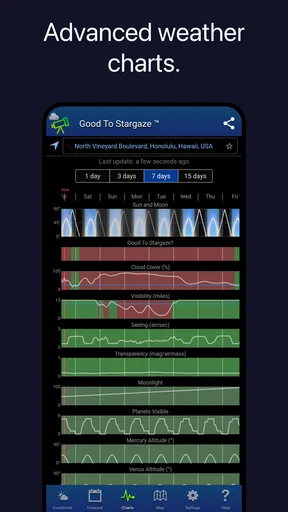
One of the coolest features of this app is its ability to provide a detailed weather forecast specifically for stargazing. We're talking cloud cover, humidity, wind speed, and even moon phase information. It’s like it knows exactly what we need. It also offers a visibility index, so you can see at a glance if tonight’s sky is worth the effort.
I also love the way it integrates astronomical events. Good To Stargaze keeps you in the loop about meteor showers, eclipses, and other celestial happenings. This way, you won’t miss out on those rare cosmic events that make stargazing so magical.
User Experience
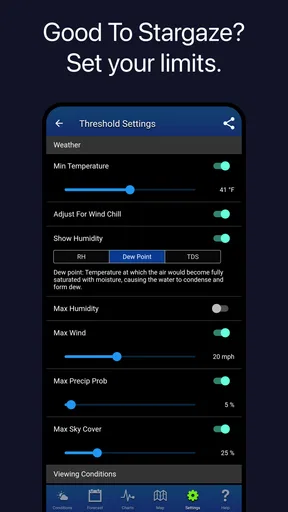
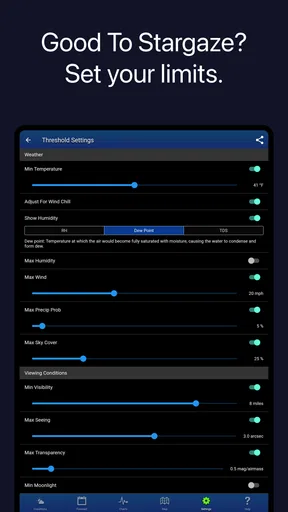
Getting around the app is a breeze. The layout is intuitive, and everything is right where you expect it to be. I’m a big fan of apps that don’t require a manual to navigate, and Good To Stargaze fits the bill perfectly. You can customize notifications for upcoming events, which means you won’t have to keep checking back. The app will nudge you when something cool is on the horizon.
Another neat aspect is the community feature. You can share your observations and insights with fellow stargazers, which adds a social element to what is often a solitary hobby. It’s like having a group of friends who are just as fascinated by the stars as you are.
Performance and Reliability
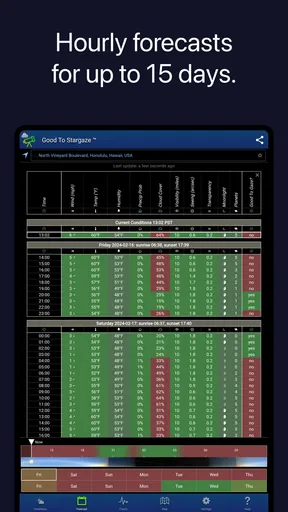
Throughout my time using the app, I found it to be very reliable. It updates weather conditions frequently, ensuring you have the most accurate information at your fingertips. The app runs smoothly without any noticeable lags or glitches, which is crucial when you’re planning your night out under the stars.
The developers seem committed to keeping the app updated with the latest data, which is reassuring. It’s clear they have a passion for stargazing too, and that comes through in the quality of the app.
Final Thoughts
To wrap it up, Good To Stargaze is a must-have for anyone with even a slight interest in the night sky. It’s one of those apps that once you start using, you wonder how you ever got by without it. Whether you're a seasoned astronomer or just someone who enjoys looking up at the stars, this app makes the whole experience so much richer.
So, next time you feel like getting lost in the cosmos, make sure you have Good To Stargaze installed on your phone. It’s a small download that can make a big difference in your stargazing adventures.
Happy stargazing!
Small decisions that improve a session
One useful habit is to check conditions before making the evening feel like a commitment. If the forecast is mixed, I would keep the plan flexible: leave the telescope packed, look outside later, and decide whether binoculars or a brief naked-eye session is enough. That avoids treating a single encouraging reading as a promise. It also prevents the opposite mistake, cancelling too early when a short break in the clouds might still make a quick look worthwhile.
For a planned trip, I would check the outlook again closer to departure rather than relying on a glance made much earlier. Weather can change, and a planning tool is most helpful when its information is relevant to the time I will actually be outside. I would also compare the app’s indication with the view from my own location. Nearby buildings, trees, and local light can affect what I can see even when the broader conditions appear favorable.
What a good forecast can and cannot decide
Cloud cover is only one part of the experience. Comfort matters too: wind and humidity can affect how long I want to stay outdoors, especially if I am standing still or handling equipment. The app’s stargazing-oriented outlook is valuable because it encourages me to consider those practical details alongside visibility. I would use that perspective to pack sensibly and set realistic expectations, not to assume that a favorable score guarantees a clear, dark sky.
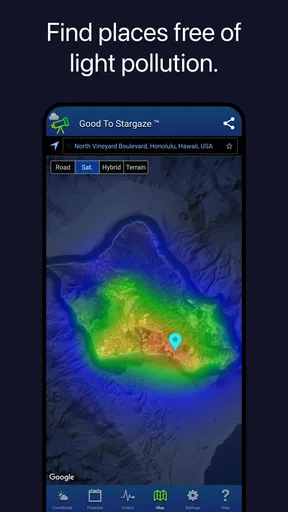
Light pollution is another consideration for anyone choosing between a familiar spot and a darker destination. A forecast cannot make a bright urban horizon disappear, so I would think about the observing location separately from the weather. That is a useful distinction for newcomers: a clear night near streetlights may still be less rewarding than a somewhat imperfect night from a better vantage point. The app can help with the conditions it presents, while the observer still has to choose a suitable place and target.
A realistic night out
Imagine I have an hour free after dinner and a telescope ready, but I am unsure whether it is worth setting everything up. I would use the app for an initial check, then decide whether to stay close to home or travel. If the conditions look encouraging, I would take the equipment outside and begin with a modest plan rather than expecting a long, uninterrupted session. If they look marginal, I could still step out for a quick look without making a drive the centerpiece of the evening.
That kind of decision is where a specialized forecast earns its place. It does not need to turn the hobby into a complicated project; it simply helps me weigh effort against likely conditions. The same approach works for a family outing or a first telescope session, where keeping the plan low-pressure is often better than promising an impressive view of the sky.
Expectations, compatibility, and cost
The app is listed at version 2.9.39 and requires Android 7.0 or later. That makes the operating-system requirement worth checking before installing on an older device. Its free entry point lets a new user try the stargazing approach without paying upfront, while the available in-app purchases span a wide range. I would avoid assuming that a paid item is necessary for basic usefulness; first, I would see whether the free experience answers the question I actually have before considering an extra purchase.
One fair question is whether this can replace a normal weather app. For me, it would be an occasional companion rather than a universal replacement. I would still use a general forecast for daily plans and turn to this one when the sky is the main reason I am checking the weather. Another natural question is whether it tells me what to observe. Its role is most useful as a conditions-and-planning aid; anyone seeking a detailed observing catalogue or a complete astronomy lesson should use a dedicated astronomy guide alongside it.
When I would choose something else
I would skip it if I rarely look at the night sky and only need a quick rain forecast, since a general weather app is likely to serve that routine better. I would also keep expectations measured if I need a definitive answer for a long journey: a forecast can inform the decision, but it cannot remove local uncertainty or guarantee a clear view at the exact spot I choose. For serious observing, I would combine its planning perspective with local judgement and whatever specialized resources help me prepare for a particular target.
For the right person, though, the narrow focus is precisely the point. The app turns a vague question—“is tonight worth it?”—into a more considered choice about visibility, comfort, timing, and effort. I would recommend trying it if stargazing is already part of your life or you are hoping to make it one, while keeping a general forecast for everything else. That is a practical role, and one that makes this weather app more useful than a standard forecast when the stars are the reason you are checking.
Pros
- Accurate weather forecasts for stargazing.
- User-friendly interface with intuitive design.
- Customizable alerts for optimal conditions.
- Comprehensive celestial event calendar.
- Offline mode for remote stargazing locations.
Cons
- Limited to certain geographic regions.
- Subscription required for full features.
- Occasional in-app ads can be distracting.
- Battery drain due to real-time updates.
- Lacks interactive star maps for beginners.
FAQs for Good To Stargaze
What is Good To Stargaze and how does it work?
Good To Stargaze is an app designed for astronomy enthusiasts, providing real-time weather forecasts and stargazing conditions. It utilizes your location to give accurate predictions about cloud cover, light pollution, and visibility of celestial events. The app helps users plan their stargazing activities by offering detailed insights and notifications.
Is Good To Stargaze available for both Android and iOS devices?
Yes, Good To Stargaze is available for both Android and iOS platforms. Users can download it from the Google Play Store or the Apple App Store. The app is optimized for mobile devices, ensuring a smooth user experience across different operating systems.
Does Good To Stargaze require an internet connection to function?
An internet connection is necessary for Good To Stargaze to fetch the latest weather data and stargazing conditions. However, once the data is downloaded, you can use some features offline. For real-time updates and accurate predictions, staying connected is recommended.
Is there a cost associated with downloading or using Good To Stargaze?
Good To Stargaze offers a free version with basic features. There may also be a premium version available, providing additional functionalities such as advanced notifications, ad-free usage, and more detailed forecasts. Users can choose based on their needs and budget.
Can Good To Stargaze be used by beginners in astronomy?
Absolutely! Good To Stargaze is user-friendly and suitable for both beginners and experienced astronomers. The app provides easy-to-understand information about stargazing conditions, making it accessible for those new to astronomy while still offering detailed data for seasoned stargazers.


